What Benefits Do HGH Fragment 176-191 & CJC-1295 DAC Offer?
Table of Contents
Introduction to HGH Fragment & CJC-1295 DAC
Interest in peptides continues to grow as more compounds show distinct roles across fat metabolism, energy use, and muscle-related pathways. Among the most discussed options, HGH Fragment 176-191 and CJC-1295 DAC stand out because each compound targets different parts of the growth-hormone system. Their structures influence how fat is processed, how energy is produced, and how tissue-support pathways function in controlled scientific environments.
Current studies examine the benefits of HGH Fragment CJC-1295 DAC to understand how these peptides behave when evaluated together. HGH Fragment 176-191 focuses on fat-linked processes, while CJC-1295 DAC maintains extended growth-hormone signaling. Exploring both peptides side by side helps clarify why this combination attracts so much attention in peptide science.
This foundation leads into how HGH Fragment 176-191 influences metabolic activity on a cellular level.
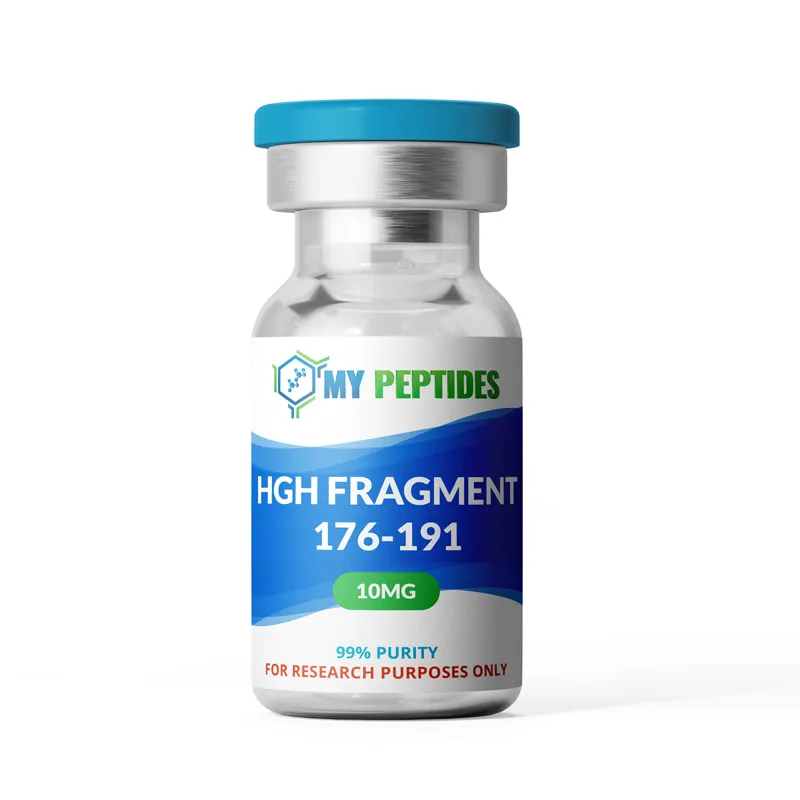
Explore HGH Fragment 176-191 from My Peptides, a focused peptide segment studied for its role in fat-linked metabolic pathways in controlled research settings.
How HGH Fragment 176-191 Impacts Metabolism?
What Benefits Do HGH Fragment 176-191 & CJC-1295 DAC Offer? 3
HGH Fragment 176-191 is a modified segment of the full growth-hormone peptide, designed to isolate the amino-acid region associated with fat metabolism. Research shows that this fragment interacts directly with adipocytes, or fat cells, where it supports lipolysis—the breakdown of stored triglycerides into usable fatty acids. This targeted interaction forms one of the central benefits of HGH Fragment CJC-1295 DAC, since it introduces a fat-specific response without acting as a full GH mimic.
Once released, these fatty acids enter energy pathways as a primary fuel source. This supports cleaner energy turnover and aligns with studies linking the fragment to fat specific activity without strong effects on blood glucose or insulin levels. This focus on targeted fat breakdown explains why the fragment often appears in discussions involving lean-mass outcomes in research.
These metabolic actions connect naturally to the broader energy-production cycle which depends on how efficiently the body converts stored fat into ATP.
The Connection Between Fat Breakdown and Energy Levels
Fat breakdown plays a central role in sustaining energy availability. During lipolysis, stored triglycerides convert into fatty acids and glycerol. These fatty acids move toward the mitochondria, where they enter beta-oxidation—a process that generates ATP, the molecule responsible for powering cellular activity.
Studies involving benefits of HGH Fragment CJC-1295 DAC indicate that it enhances this process by increasing access to fatty acids as fuel. This support for fat-based energy production creates stable energy flow in metabolic models making fat reserves a primary energy source during evaluation. This connection explains why the fragment remains an important focus in metabolic research.
Understanding this energy pathway sets the stage for examining how the second compound, CJC-1295 DAC, contributes longer-lasting growth-hormone activity that complements the fragment’s fast-acting metabolic role.
Why CJC-1295 DAC Is Known for Muscle Support?
CJC-1295 DAC connects with growth-hormone pathways involved in nutrient flow, protein turnover, and tissue balance. Its extended signaling pattern aligns with processes that influence muscle-support pathways. This steady effect distinguishes it from shorter-acting compounds that limit responses to brief windows.
By offering longer signaling duration, CJC-1295 DAC helps maintain patterns that require consistent timing. Its broader support role complements the narrow, fat-linked actions of HGH Fragment 176-191. This contrast creates a wider activity profile when both peptides appear together in metabolic and tissue-related discussions.
With the individual roles established, the next focus is how these compounds operate when evaluated side by side, since their combined actions highlight a clearer picture of their potential applications.
Explore CJC-1295 DAC from My Peptides, a long-acting GHRH analog examined for extended growth-hormone–related activity in scientific studies.
The Synergy of HGH Fragment 176-191 and CJC-1295 DAC
HGH Fragment 176-191 and CJC-1295 DAC form a complementary pattern when paired. The fragment directs attention toward fat-linked pathways, while CJC-1295 DAC maintains steady growth hormone signals over longer periods. Together these timing differences support a layered sequence of metabolic effects.
The fragment supplies fast, targeted cues tied to lipid turnover, and CJC-1295 DAC supplies sustained background activity that aligns with nutrient movement and signal duration. These roles create one of the central Benefits of HGH Fragment CJC-1295 DAC, especially when both peptides are evaluated together.
Synergy Overview Table
Feature
HGH Fragment 176-191
CJC-1295 DAC
Combined Effect
Primary Focus
Fat-linked pathways
Extended GH-axis signaling
Short + long activity patterns
Timing Pattern
Fast, targeted action
Slow, steady signal support
Layered timing across pathways
Metabolic Role
Supports lipid turnover
Influences nutrient flow
Balanced metabolic pattern
Energy Influence
Aligns with fat-breakdown cues
Supports consistent energy signals
Smoother energy movement
Body Composition Impact
Connects to fat-use pathways
Connects to tissue-support signals
Broader composition balance
Synergy Advantage
Precise, narrow focus
Long-duration effect
Complements strengths of both peptides
This coordinated pattern sets the foundation for understanding how both peptides connect to changes in body structure, especially in controlled environments designed to examine metabolic shifts.
How These Peptides May Influence Body Composition?
Body composition reflects both fat movement and tissue support activity. Benefits of HGH Fragment CJC-1295 DAC connects with fat-linked pathways that influence lipid turnover during metabolic cycles. These signals influence how stored fats move through energy processes. CJC-1295 DAC, by contrast, connects with nutrient flow and tissue-related cues that need longer signaling windows.
Together, these patterns influence different sides of body composition. The fragment supports fat-use pathways while CJC-1295 DAC connects with signals that shape tissue balance. This combination forms a multi-step pattern that aligns with discussions around metabolic changes and structural balance.
These adjustments in fat- and tissue-related pathways also connect to recovery-focused discussions, creating a natural transition into the next area of interest.
The Role of Peptides in Supporting Recovery
Recovery links to steady signaling patterns, nutrient timing and energy availability. CJC-1295 DAC connects with signals that require sustained activity for effective tissue support. Its long duration pattern aligns with processes that operate best under stable timing.
HGH Fragment 176-191 contributes to recovery-linked discussions by influencing lipid turnover and energy flow. By supporting consistent energy substrates, it helps maintain conditions that align with recovery-focused pathways. These combined effects add another layer to the broader Benefits of HGH Fragment CJC-1295 DAC in peptide-centered conversations.
Future Insights for HGH Fragment 176-191 and CJC-1295 DAC
HGH Fragment 176-191 and CJC-1295 DAC continue to gain attention as studies reveal how each peptide interacts with fat use, energy pathways, and growth-hormone activity. Early findings show that the fragment may support targeted fat breakdown while CJC-1295 DAC may help maintain steady GH-linked signals over longer periods. These observations highlight promising directions for understanding metabolic control.
Future work may focus on how both peptides behave in combined models and whether timing differences create clearer patterns across lipid use and tissue-support pathways. While evaluations remain in controlled research settings, continued progress points to new possibilities for studying metabolic balance.
At My Peptides, high-purity peptides support this growing field by helping researchers explore these pathways with accuracy and consistency.
Scientific Research
(1) Heffernan MA, Thorburn AW, Fam B, Summers R, Conway-Campbell B, Waters MJ, Ng FM. Increase of fat oxidation and weight loss in obese mice caused by chronic treatment with human growth hormone or a modified C-terminal fragment. Int J Obes Relat Metab Disord. 2001 Oct;25(10):1442-9.
(2) Schally AV, Zhang X, Cai R, Hare JM, Granata R, Bartoli M. Actions and Potential Therapeutic Applications of Growth Hormone-Releasing Hormone Agonists. Endocrinology. 2019 Jul 1;160(7):1600-1612.
(3) Ng FM, Bornstein J. Hyperglycemic action of synthetic C-terminal fragments of human growth hormone. Am J Physiol. 1978 May;234(5):E521-6.
(4) Saugy M, Robinson N, Saudan C, Baume N, Avois L, Mangin P. Human growth hormone doping in sport. Br J Sports Med. 2006 Jul;40 Suppl 1(Suppl 1):i35-9.
Frequently Asked Questions about HGH Fragment 176-191 & CJC-1295 DAC
Does CJC-1295 DAC increase IGF-1 more than HGH Fragment 176-191?
Research shows CJC-1295 DAC increases IGF-1 more than HGH Fragment. It activates the GHRH pathway, which supports steady GH release for several days. This rise in GH drives a stronger IGF-1 response. HGH Fragment does not act on this pathway and shows little impact on IGF-1. Because of this difference, CJC-1295 DAC produces a higher and more stable IGF-1 level in research models.
How does the CJC-1295 DAC and HGH Fragment 176-191 combination affect fat metabolism?
The combination affects fat metabolism through two pathways. CJC-1295 DAC raises GH and IGF-1, which support fat use and overall metabolic activity. HGH Fragment targets fat cells more directly and may promote fat breakdown while slowing fat storage. In research settings, these combined actions can create stronger fat-metabolism changes than either peptide produces on its own.
Does the long half-life of CJC-1295 DAC improve the effects of HGH Fragment 176-191?
CJC-1295 DAC’s long half-life keeps GH and IGF-1 elevated for an extended time, creating a steady hormonal environment. This stable background may support the fat-focused activity of HGH Fragment in research models. While CJC-1295 DAC does not extend the fragment’s own duration, it helps maintain conditions that may make the overall metabolic effects of the combination more consistent.
What side effects appear in research on CJC-1295 DAC or HGH Fragment 176-191?
Research notes possible effects such as mild injection-site redness, headaches, or short-term water retention. CJC-1295 DAC may also influence glucose control or joint comfort because it raises GH for longer periods. HGH Fragment shows fewer GH-related effects, but long-term data is limited. Many research studies monitor IGF-1, glucose, and other markers to track safety.
What metabolic role does HGH Fragment 176-191 play compared to CJC-1295 DAC?
HGH Fragment acts mainly on fat cells and may support fat breakdown while slowing fat storage. Its role centers on fat metabolism. CJC-1295 DAC works through the GHRH pathway to raise GH and IGF-1, which support fat use, muscle repair, and energy balance. Their different actions make them useful for studying multiple areas of metabolic function.
Why do researchers study HGH Fragment 176-191 and CJC-1295 DAC together?
Researchers study this combination because each peptide targets a different part of metabolism. HGH Fragment focuses on fat-cell activity and fat breakdown, while CJC-1295 DAC raises GH for better energy use, recovery, and metabolic support. Their complementary roles can create broader changes in body-composition markers, which makes the combination appealing in controlled research environments.
ALL PRODUCT INFORMATION AND ARTICLES ON THIS SITE ARE INTENDED FOR EDUCATIONAL PURPOSES ONLY.DISCLAIMER:
All products sold by My Peptides are strictly intended for research and laboratory use only. These items are not designed for human or animal use or consumption. They are not classified as drugs, food, cosmetics, or medicinal products and must not be mislabeled or misused as such. By purchasing from our website, buyers acknowledge and accept all risks associated with handling these materials. The information and articles provided on this website are purely for educational and informational purposes. Handling and usage of these products should be carried out exclusively by qualified professionals.
MK-677 for women often appears in discussions about growth hormone pathways and body composition markers. Many studies focus on how this compound interacts with signals linked to muscle development and fat-related measurements. These studies aim to understand whether female test models show different patterns than male subjects. A large amount
Understanding NAD+ Peptide and Cognitive Function NAD+ (nicotinamide adenine dinucleotide) supports cognitive function by driving energy metabolism inside neurons. Brain cells require constant ATP production to maintain electrical signaling and neurotransmitter release. NAD+ in redox reactions that generate ATP during mitochondrial respiration. When neurons maintain sufficient NAD+ levels, they sustain
Ipamorelin and Sermorelin: What’s the Difference Interest in growth hormone research continues to rise, and Ipamorelin and Sermorelin remain two of the most studied peptides in this area. Each peptide influences growth hormone activity through a distinct pathway, making comparative studies highly valuable. Ipamorelin often produces a consistent effect, allowing