How Can a BPC-157 and TB-500 Blend Support Recovery?
Table of Contents
Understanding the BPC-157 and TB-500 Blend for Faster Recovery
The body repairs damaged tissue through a coordinated sequence involving cell migration, vascular signaling and collagen restructuring. Researchers study a BPC-157 and TB-500 Blend because it allows examination of how these repair stages interact within the same experimental setting. This combined approach helps clarify how early cellular responses influence later structural outcomes.
BPC-157 interacts with signaling pathways linked to collagen organization, tissue stability and blood vessel function, which are critical during later repair phases. TB-500 supports actin regulation and cell migration, a key process during early tissue response. When studied together the BPC-157 and TB-500 Blend helps researchers evaluate how early cellular movement aligns with organized tissue rebuilding in muscle, connective tissue, and skin models.
Because cellular movement sets the pace for everything that follows, understanding this early phase provides important insight into the overall recovery process.
Explore the BPC-157 and TB-500 Blend from My Peptides, a peptide combination studied for cell migration, tissue organization, and coordinated recovery signaling.
How Does a BPC-157 and TB-500 Blend Support Early Cell Migration?
How Can a BPC-157 and TB-500 Blend Support Recovery? 4
Early tissue repair depends on the ability of cells to move efficiently toward damaged areas. A BPC-157 and TB-500 Blend supports this process by influencing cellular movement and internal structural organization during the initial repair phase in experimental models. Cell migration allows fibroblasts and support cells to reach injury sites, where they begin coordinating repair signals.
TB-500 supports actin regulation, which controls cell shape changes and directional movement through tissue matrices. This mechanism helps cells travel faster and with greater coordination. BPC-157 supports signaling pathways that maintain tissue stability as migrating cells arrive. When studied together, the BPC-157 and TB-500 Blend helps researchers examine how effective early cell migration establishes the foundation for organized tissue repair.
As tissue repair continues beyond this initial response, additional biological signals help sustain coordination, balance and long-term structure.
Explore TB500 from My Peptides, a thymosin beta 4-derived peptide that supports cell movement and tissue repair for enhanced recovery.
The Role of Additional Peptides in Wound Healing and Skin Repair
Several peptides support wound healing and skin repair by acting alongside core tissue recovery pathways. While primary mechanisms such as cell migration and collagen restructuring drive repair, additional peptides influence how efficiently these processes coordinate and stabilize over time.
CJC-1295, GHK-Cu and MGF represent peptides frequently examined for these supportive roles. CJC-1295 influences growth-related signaling that supports tissue maintenance, GHK-Cu contributes to collagen related activity and skin focused repair signaling, and MGF supports localized responses associated with tissue adaptation. Together, these peptides help researchers examine how supportive signals interact with foundational repair processes during wound healing and skin repair research.
Among these supportive signals, growth related pathways play a central role in maintaining tissue balance during extended recovery.
What Does CJC-1295 Do in Tissue Repair?
How Can a BPC-157 and TB-500 Blend Support Recovery? 5
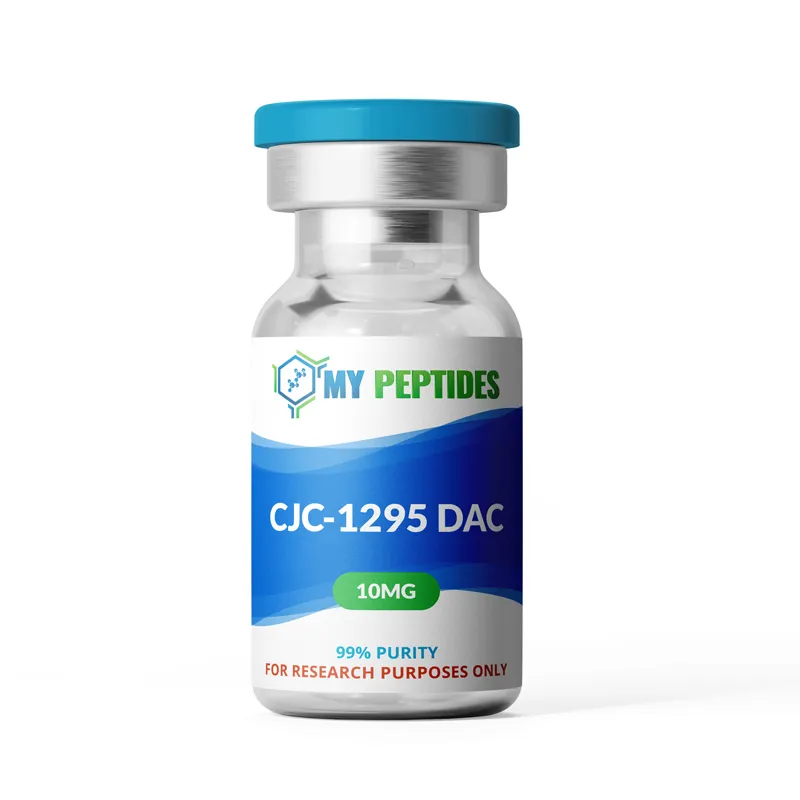
CJC-1295 supports tissue repair by stimulating the body’s natural release of growth hormone, which leads to increased IGF-1 signaling. This growth-related signaling plays a key role in protein synthesis, cellular turnover and structural maintenance, all of which influence how tissues respond during repair. Instead of acting directly at the injury site, CJC-1295 works systemically to shape the biological environment that supports repair processes.
In tissue repair contexts, sustained growth hormone and IGF-1 activity helps maintain connective tissue integrity and supports long term tissue balance. Researchers use CJC 1295 to study how systemic growth signals interact with localized repair activity particularly during prolonged or multi phase tissue recovery.
While systemic signaling influences overall tissue behavior, surface level repair depends heavily on matrix activity and cellular communication.
Discover CJC-1295 from My Peptides, a growth hormone–releasing peptide examined for its influence on IGF-1 signaling and long-term tissue support.
GHK-Cu and Its Role in Wound Healing and Skin Repair
How Can a BPC-157 and TB-500 Blend Support Recovery? 6
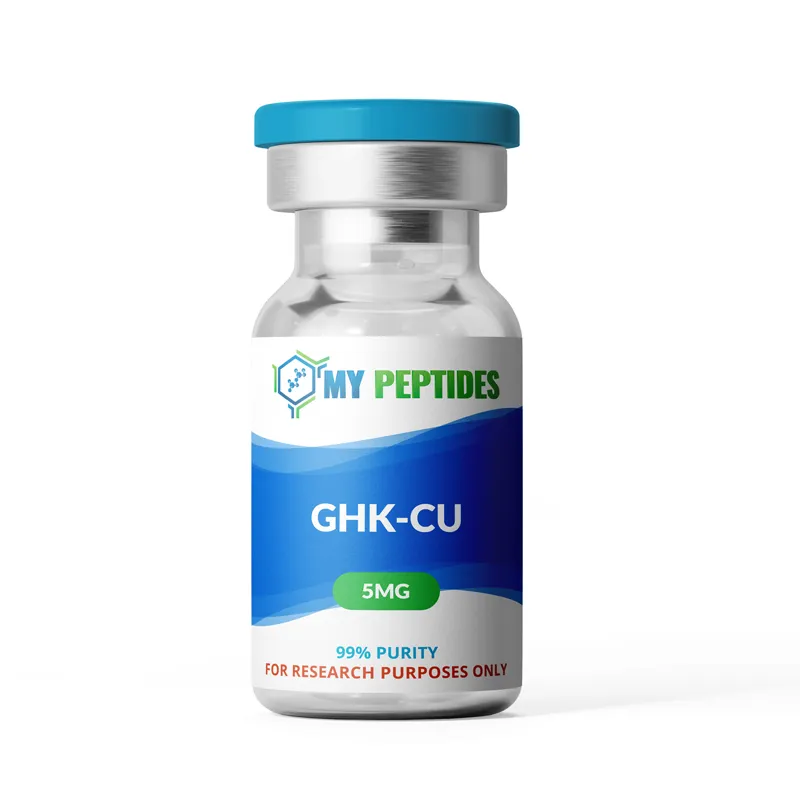
GHK-Cu supports wound healing and skin repair by promoting collagen production, extracellular matrix remodeling and cellular communication. Research shows that GHK-Cu activates pathways involved in fibroblast activity, which helps rebuild skin structure and improve tissue strength during repair.
GHK-Cu also regulates enzymes responsible for tissue remodeling and supports signals that guide repair cells to damaged areas. In addition, it influences antioxidant and inflammatory balance, which helps maintain a stable environment for skin regeneration.
Through these combined actions, GHK-Cu allows researchers to study how coordinated matrix repair, cellular signaling, and tissue organization contribute to effective wound healing and skin repair. Some repair responses occur even earlier and remain tightly confined to the site of mechanical stress.
Explore GHK-Cu from My Peptides, a copper peptide researched for its involvement in collagen activity, extracellular matrix remodeling, and skin repair signaling.
Comparison of the BPC-157 and TB-500 Blend With Other Peptides in Tissue Recovery
The future of the BPC-157 and TB-500 Blend in recovery research continues to strengthen as scientists expand their understanding of coordinated tissue repair. Ongoing studies focus on how early cellular movement connects with later structural organization to support stable and measurable recovery processes. This direction helps clarify timing, signaling interactions and tissue specific responses with greater precision.
As research advances, the BPC-157 and TB-500 Blend is likely to remain central to comparative and mechanism focused studies that examine recovery biology in depth. At My Peptides, we support this progress by providing reliable access to research peptides with worldwide shipping allowing investigators to explore recovery pathways using consistent and well documented materials. Continued research will refine understanding and guide future discovery through evidence driven exploration rather than speculation.
References:
[1] Sikiric P, Seiwerth S, Rucman R, Kolenc D, Vuletic LB, Drmic D, Grgic T, Strbe S, Zukanovic G, Crvenkovic D, Madzarac G, Rukavina I, Sucic M, Baric M, Starcevic N, Krstonijevic Z, Bencic ML, Filipcic I, Rokotov DS, Vlainic J. Brain-gut Axis and Pentadecapeptide BPC 157: Theoretical and Practical Implications. Curr Neuropharmacol. 2016;14(8):857-865.
[2] Seiwerth S, Sikiric P, Grabarevic Z, Zoricic I, Hanzevacki M, Ljubanovic D, Coric V, Konjevoda P, Petek M, Rucman R, Turkovic B, Perovic D, Mikus D, Jandrijevic S, Medvidovic M, Tadic T, Romac B, Kos J, Peric J, Kolega Z. BPC 157’s effect on healing. J Physiol Paris. 1997 May-Oct;91(3-5):173-8.
[3] Chang CH, Tsai WC, Lin MS, Hsu YH, Pang JH. The promoting effect of pentadecapeptide BPC 157 on tendon healing involves tendon outgrowth, cell survival, and cell migration. J Appl Physiol (1985). 2011 Mar;110(3):774-80.
[4] Chung-Hsun Chang, Wen-Chung Tsai, Ya-Hui Hsu, and Jong-Hwei Su Pang (2014) Pentadecapeptide BPC 157 Enhances the Growth Hormone Receptor Expression in Tendon Fibroblasts – Molecules, 2014 Nov, Volume 19 (Issue 11), Pages 19066–19077.
[5] K.M.Malinda et al. (1999) Thymosin β4 Accelerates Wound Healing – Journal of Investigative Dermatology 1999 Sep;113(3):364-8
Frequently Asked Questions
How does inflammation affect recovery?
Inflammation plays a major role in how fast tissues repair. Mild inflammation can help begin the healing cycle, while high inflammation can slow cell movement and collagen growth. Peptides like BPC-157 and TB-500 Blend may support balanced inflammation, which helps tissues repair in a steady and organized way.
Can it help tendon and ligament healing?
The BPC-157 and TB-500 Blend supports tendon and ligament repair by acting on key pathways. TB500 helps cells move and align, while BPC157 guides collagen structure and stability. Together, they create strong support for soft tissue healing in controlled peptide work.
Is TB500 or BPC-157 legal for use in the USA?
TB500 and BPC157 are available in the USA for authorized peptide work. They do not hold approval for medical use, and regulations limit them to non-medical purposes only.
Are there known risks or safety concerns with BPC-157 or TB500?
TB500 and BPC157 blend show good tolerance in many peptide projects, but long-term human effects are not fully defined. Because data is still limited, careful handling, proper storage, and controlled plans are important when working with these compounds.
Can BPC-157 or TB500 help tendon-to-bone healing?
TB500 and BPC157 show strong potential in tendon-to-bone repair work. They support cell movement, collagen growth, and new vessel formation, which helps tissues connect and strengthen. These actions make the pair useful when studying complex attachment points like tendon-to-bone areas.
ALL PRODUCT INFORMATION AND ARTICLES ON THIS SITE ARE INTENDED FOR EDUCATIONAL PURPOSES ONLY.
DISCLAIMER: All products sold by My Peptides are strictly intended for research and laboratory use only. These items are not designed for human or animal use or consumption. They are not classified as drugs, food, cosmetics, or medicinal products and must not be mislabeled or misused as such. By purchasing from our website, buyers acknowledge and accept all risks associated with handling these materials. The information and articles provided on this website are purely for educational and informational purposes. Handling and usage of these products should be carried out exclusively by qualified professionals.
How Does TA1 Peptide Help The Body Fight Viral Infections? Ta1 peptide (thymosin alpha-1) is a 28-amino-acid peptide originally isolated from thymus tissue and studied for its ability to regulate immune activity. Research shows that Ta1 peptide influences both innate and adaptive immune responses, which include immune cells that detect
Can AOD 9604 Peptide Help with Joint and Cartilage Repair? Experimental joint studies show that AOD 9604 peptide can promote cartilage regeneration in osteoarthritis models. In a collagenase-induced knee osteoarthritis rabbit model, researchers injected AOD 9604 directly into the joint and then examined cartilage tissue. The treated joints showed enhanced
Understanding NAD+ Peptide and Cognitive Function NAD+ (nicotinamide adenine dinucleotide) supports cognitive function by driving energy metabolism inside neurons. Brain cells require constant ATP production to maintain electrical signaling and neurotransmitter release. NAD+ in redox reactions that generate ATP during mitochondrial respiration. When neurons maintain sufficient NAD+ levels, they sustain