Can Peptide Therapy Accelerate Tendonitis Healing?
Table of Contents
How Does Peptide Therapy Support Tendonitis Recovery and Healing?
Tendonitis develops when repeated strain or overuse stresses tendon fibers, leading to pain, stiffness, and reduced mobility. Many people search for ways to understand how tendons heal and what supports recovery at the cellular level. This growing interest has drawn attention to Peptide Therapy within laboratory and preclinical research focused on tissue repair.
Researchers study peptides such as BPC-157, TB500, and GHK-Cu because they interact with key signals involved in tendon structure and recovery. In research models, these peptides influence inflammation responses, collagen organization and cellular communication within stressed tendon tissue. These early findings help scientists better understand the biological environment that shapes tendon healing and recovery timelines.
One biological response plays a particularly strong role in shaping how this environment develops after tendon stress.
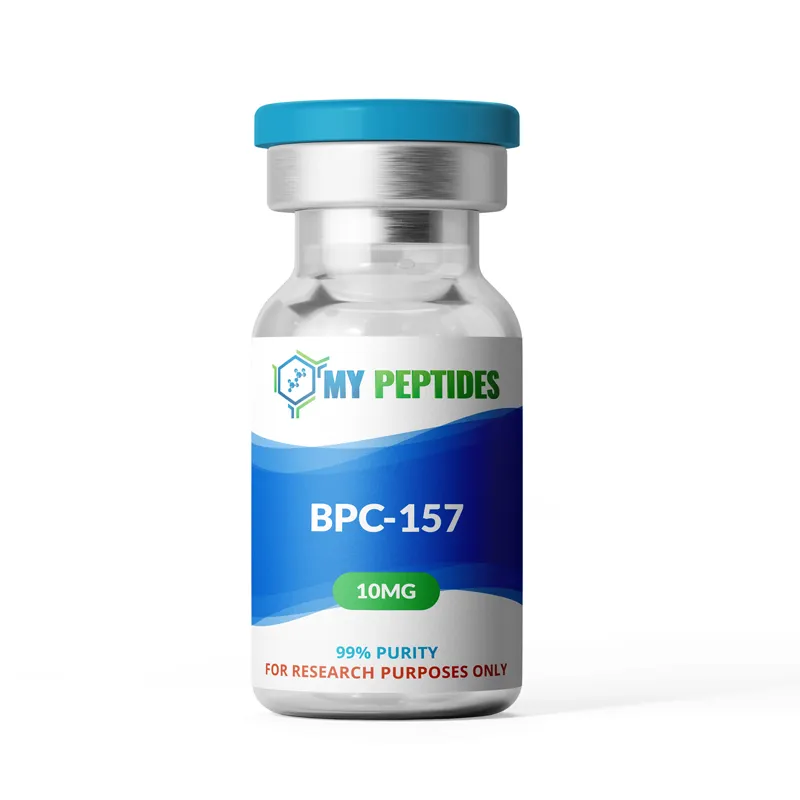
Explore BPC-157 Peptide from My Peptides, a gastric-derived peptide studied for its role in tendon tissue stability, cellular signaling, and structural recovery processes.
Tendon Inflammation and Its Impact on the Healing Process
Tendon inflammation begins when stressed tissue triggers a protective response to injury. This response increases fluid buildup and immune signaling, around the tendon which can cause pain and stiffness. In the early stage, inflammation helps remove damaged cells and prepares the area for repair. Problems start when this response stays active for too long.
Ongoing inflammation disrupts collagen alignment and limits the tendon’s ability to regain strength. It can also reduce nutrient delivery and slow cellular communication inside the tissue. Research show that prolonged inflammation often extends recovery timelines which explains why tendonitis can linger.
Because inflammation directly affects tissue structure, collagen organization becomes the next factor that influences how well tendons recover.
How Collagen Organization Affects Tendon Strength and Recovery?
Can Peptide Therapy Accelerate Tendonitis Healing? 5
Collagen forms the structural backbone of tendon tissue and allows tendons to handle tension during movement. Healthy tendons rely on tightly aligned collagen fibers to distribute force evenly and support flexibility. When injury occurs this structure can break down leaving the tendon weaker, and more vulnerable during recovery. Research into Peptide Therapy often focuses on how biological signals influence this structural rebuilding process.
Proper healing depends on restoring collagen in an organized and controlled manner. Research show that poorly aligned collagen reduces tensile strength, and increases the risk of repeated strain. Studies exploring Peptide Therapy examine how cellular communication guides fiber alignment during recovery.
Once structural rebuilding begins, researchers often focus on peptides that influence how tendons maintain stability during this phase.
The Role of BPC-157 in Tendon Healing
Can Peptide Therapy Accelerate Tendonitis Healing? 6
BPC-157 appears in Peptide Therapy research because scientists study its role in tendon tissue stability and repair signaling. Published studies show that BPC 157 supports tendon fibroblast activity which helps maintain tendon structure during recovery from strain or injury. Researchers observe improved cellular organization when tendon tissue responds to stress under controlled conditions.
Research also connects BPC 157 to pathways involved in blood vessel support and local tissue signaling. These mechanisms matter because tendons rely on limited circulation to deliver nutrients during recovery. By influencing these biological signals, BPC-157 allows researchers to examine how tendons restore strength and structural balance.
Tendon recovery also depends on how cells move and coordinate within connective tissue.
TB-500 and Its Connection to Tendon Healing Processes
Can Peptide Therapy Accelerate Tendonitis Healing? 7
TB 500 appears in Peptide Therapy discussions because researchers examine its connection to cell movement and tissue coordination. This peptide relates to thymosin beta 4 which plays a role in regulating actin. A protein that helps cells move and adapt during tissue repair. In research scientists focus on how TB 500 supports cellular mobility within stressed connective tissue.
Studies also link TB-500 to biological pathways involved in tissue flexibility and structural adjustment. These processes matter because tendon recovery depends on controlled cell movement and proper tissue remodeling. By influencing how cells migrate and respond to mechanical stress, TB-500 helps researchers explore how tendons regain functional balance and adapt during the healing process.
As remodeling continues, long-term tendon strength relies on how connective tissue components remain balanced over time.
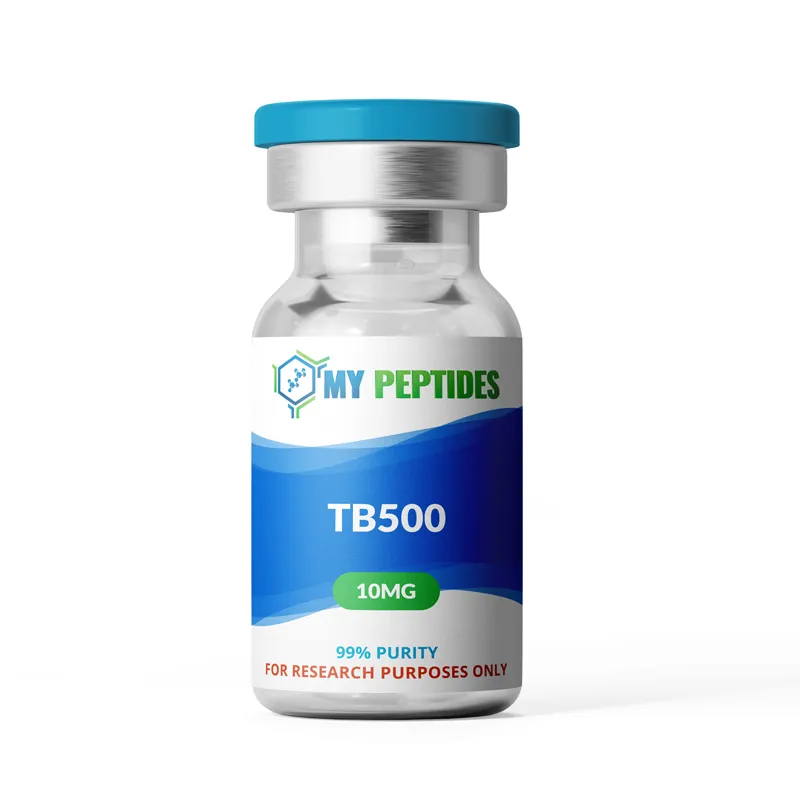
Explore TB-500 Peptide from My Peptides, a thymosin beta-4–related peptide examined for its connection to cell movement, tissue coordination, and connective tissue adaptation.
How Is GHK-Cu Involved in Tendon Tissue Repair?
Can Peptide Therapy Accelerate Tendonitis Healing? 8
GHK-Cu draws interest in Peptide Therapy because it connects copper activity with connective tissue maintenance. Researchers examine this peptide for its ability to influence fibroblast behavior which plays a central role in producing collagen, and other matrix components that give tendons their strength and elasticity. These processes directly affect how tendon tissue responds to ongoing load and strain.
Studies also associate GHK-Cu with regulatory pathways that help manage collagen balance and oxidative stress within tissue environments. Copper driven signaling supports fiber organization and long term tissue stability, which are critical for tendons exposed to constant mechanical demand.
When these peptides are viewed together, their differences become easier to understand.
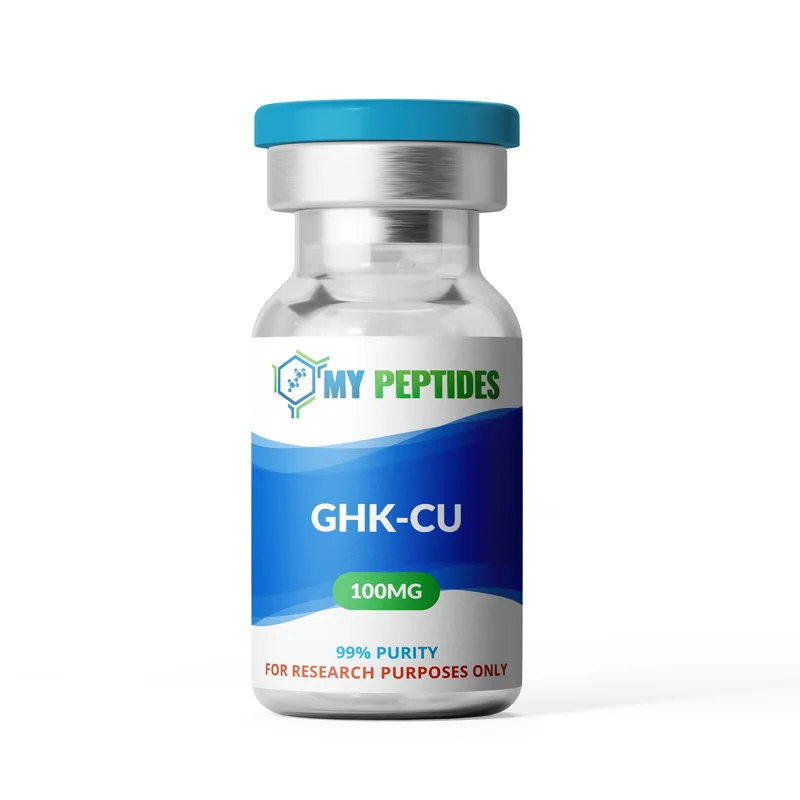
Explore GHK-Cu Peptide from My Peptides, a copper-binding peptide studied for its influence on collagen balance, matrix remodeling, and connective tissue maintenance.
How Do Peptides Support Tendon Recovery in Different Ways?
Peptide Therapy research highlights that tendon recovery involves multiple biological processes, not a single repair pathway. Different peptides influence different stages of tissue response, which helps researchers study tendon structure, signaling, and remodeling in a more targeted way.
Peptide
Primary Research Focus
Key Tendon-Related Processes Studied
BPC-157
Tissue stability and repair signaling
Fibroblast activity, local signaling, tendon integrity under strain
This comparison shows how peptide research approaches tendon recovery through complementary biological mechanisms rather than overlapping functions.
Current research trends also point toward how these insights may shape future investigation.
The Future of Peptide Therapy in Tendon Recovery
Research into Peptide Therapy continues to move toward a more detailed understanding of tendon recovery at the molecular level. Instead of focusing on symptoms, future studies aim to map how signaling, tissue remodeling and structural maintenance interact during long-term tendon stress. This shift helps researchers study recovery as an ongoing process rather than a single repair event.
As analytical tools improve, peptide research is expected to explore timing, sequencing, and interaction between different repair signals. Peptides such as BPC-157, TB-500 and GHK-Cu provide useful models for studying these layered mechanisms. At My Peptides, we support this research direction by supplying peptides for laboratory study worldwide, helping advance insight into how tendons adapt, maintain resilience and respond to repeated mechanical demands over time.
References:
[1] Staresinic M, Sebecic B, Patrlj L, Jadrijevic S, et al. Gastric pentadecapeptide BPC 157 accelerates healing of transected rat Achilles tendon and in vitro stimulates tendocytes growth. J Orthop Res. 2003 Nov;21(6):976-83.
[2] Chang CH, Tsai WC, Hsu YH, Pang JH. Pentadecapeptide BPC 157 enhances the growth hormone receptor expression in tendon fibroblasts. Molecules. 2014 Nov 19;19(11):19066-77.
[3] Xu B, Yang M, Li Z, Zhang Y, et al. Thymosin β4 enhances the healing of medial collateral ligament injury in rat. Regul Pept. 2013 Jun 10;184:1-5.
[4] Pickart L, Margolina A. Regenerative and Protective Actions of the GHK-Cu Peptide in the Light of the New Gene Data. Int J Mol Sci. 2018 Jul 7;19(7):1987.
Frequently Asked Questions
How do peptides affect collagen fiber alignment in tendon recovery?
Peptides influence cellular signaling that guides how fibroblasts produce and organize collagen during tendon repair. In research, these signals support more ordered collagen fiber alignment rather than random deposition. Proper alignment helps restore tensile strength and structural stability as tendon tissue remodels under mechanical stress during recovery.
Can peptide therapy help chronic tendon damage?
Research studies examine peptides in chronic tendon damage because long term injuries involve disrupted signaling, poor collagen structure and ongoing inflammation. Peptides are studied for their ability to influence fibroblast activity, tissue remodeling and cellular communication in prolonged injury environments, which differ from short-term acute repair responses.
When is peptide therapy studied for acute vs chronic injuries?
Peptide research evaluates acute injuries during early inflammation and initial repair phases, while chronic injury studies focus on remodeling and long term tissue adaptation. Acute models examine early signaling and cellular response, whereas chronic models analyze collagen organization, tissue stability and response to repeated mechanical stress over time.
How long does peptide therapy take to support tendon healing?
Research timelines vary based on study design, injury severity and biological targets. In preclinical models, measurable changes in inflammation signaling or tissue organization may appear within weeks while collagen remodeling and structural adaptation typically require longer observation periods to evaluate sustained effects on tendon recovery.
What makes peptide therapy different from traditional recovery methods?
Peptide research differs from traditional recovery approaches by focusing on molecular signaling rather than symptom control. Instead of reducing discomfort or limiting movement, peptides are studied for how they influence cellular communication, inflammation regulation and tissue remodeling processes that shape tendon structure and long term functional resilience.
ALL PRODUCT INFORMATION AND ARTICLES ON THIS SITE ARE INTENDED FOR EDUCATIONAL PURPOSES ONLY.
DISCLAIMER: All products sold by My Peptides are strictly intended for research and laboratory use only. These items are not designed for human or animal use or consumption. They are not classified as drugs, food, cosmetics, or medicinal products and must not be mislabeled or misused as such. By purchasing from our website, buyers acknowledge and accept all risks associated with handling these materials. The information and articles provided on this website are purely for educational and informational purposes. Handling and usage of these products should be carried out exclusively by qualified professionals.
How Does TA1 Peptide Help The Body Fight Viral Infections? Ta1 peptide (thymosin alpha-1) is a 28-amino-acid peptide originally isolated from thymus tissue and studied for its ability to regulate immune activity. Research shows that Ta1 peptide influences both innate and adaptive immune responses, which include immune cells that detect
Can AOD 9604 Peptide Help with Joint and Cartilage Repair? Experimental joint studies show that AOD 9604 peptide can promote cartilage regeneration in osteoarthritis models. In a collagenase-induced knee osteoarthritis rabbit model, researchers injected AOD 9604 directly into the joint and then examined cartilage tissue. The treated joints showed enhanced
Understanding NAD+ Peptide and Cognitive Function NAD+ (nicotinamide adenine dinucleotide) supports cognitive function by driving energy metabolism inside neurons. Brain cells require constant ATP production to maintain electrical signaling and neurotransmitter release. NAD+ in redox reactions that generate ATP during mitochondrial respiration. When neurons maintain sufficient NAD+ levels, they sustain