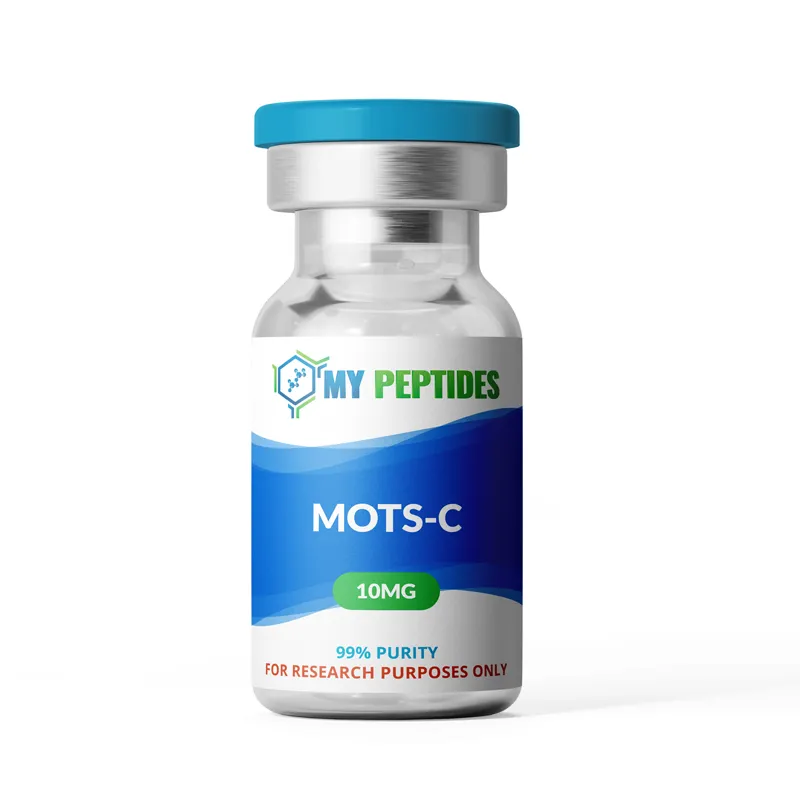
Is MOTS-C an Effective Peptide for Losing Body Fat?
Table of Contents
MOTS-C for Fat Loss Works to Boost Metabolism and Target Stubborn Fat
Scientists are uncovering impressive findings about MOTS-C and its influence on fat loss. This small mitochondrial peptide plays a surprising role in how the body manages energy. Research shows that MOTS C can limit visceral fat gain by improving mitochondrial performance in key tissues and by reducing oxidative stress, which often slows metabolism.
What makes MOTS-C especially compelling is its ability to activate AMPK, the cellular switch that tells the body to burn fat instead of store it. In studies where mice consumed high fat diets, MOTS-C improved glucose control and insulin sensitivity without affecting appetite or activity. These changes point to more efficient energy use and stronger fat burning capacity at the cellular level.
This shift in energy handling connects directly to AMPK, which guides how the body chooses fuel and supports fat loss in notable ways.
Explore MOTS C from My Peptides, a mitochondrial peptide studied for its role in energy balance and fat-related metabolic pathways in research.
How AMPK Signaling Pathway Transforms Fat Metabolism?
The AMPK signaling pathway represents your body’s master metabolic switch, and it controls whether cells store energy or burn it for fuel. AMPK can be seen as a cellular fuel gauge that responds to and carefully monitors energy levels and energy metabolism.
Low energy causes AMPK activation, starting metabolic shifts which favor fat oxidation rather than glucose use. MOTS-C helps in fat loss as it inhibits the folate-methionine cycle. This inhibition results in the accumulation of AICAR, and that powerfully activates AMPK. Occurrence of this activation makes outstanding downstream impacts.
ACC gets phosphorylated by AMPK, thus shutting down fatty acid synthesis and promoting fat burning. The pathway also reduces malonyl-CoA levels, which removes the brakes on carnitine palmitoyltransferase I (CPT1), allowing more fatty acids to enter mitochondria for oxidation via the electron transport chain.
Recent studies demonstrate that AMPK activation enhances fatty acid oxidation while simultaneously reducing fat synthesis creating an optimal environment for sustained fat loss. What’s particularly interesting is how AMPK can phosphorylate hormone sensitive lipase to increase its activity, thereby promoting the breakdown of stored fat.
These changes in cellular behavior form a foundation for understanding why insulin sensitivity becomes another major factor in effective fat loss.
Why Insulin Sensitivity Drives Fat Loss Results?
Insulin sensitivity determines how effectively cells respond when insulin signals for glucose uptake and storage occur. For fat loss, MOTS-C greatly improves insulin sensitivity of muscle tissue through multiple mechanisms that scientific investigations reveal. This improvement comes from directly activating glucose transporters and increasing the cellular glucose uptake capacity.
Improved insulin sensitivity causes less glucose to convert to fat storage while promoting muscle glycogen replenishment. Evidence indicates that when insulin functions more efficiently, the body shifts toward fat oxidation and uses fat as a preferred energy source.
Scientists observe these effects particularly in skeletal muscle tissue during controlled studies, where improved insulin sensitivity correlates with increased metabolic flexibility.
Plasma MOTS C levels correlate negatively with markers of insulin resistance including fasting insulin and body mass index. In older mice with age-related insulin resistance, researchers administered MOTS C. Insulin sensitivity, after only seven days of treatment, improved to match young mice.
With these metabolic improvements confirmed, interest naturally extends to how MOTS C affects exercise performance and activity-driven fat use.
What Exercise Performance Benefits Support Fat Loss
MOTS C has been shown to improve exercise ability in a steady and reliable way across many studies. In lab tests, subjects treated with MOTS C ran better and produced more power. They also had more endurance and overall better athletic performance. This happens because the peptide helps the mitochondria work better during physical activity and cellular stress. As a result, cells can make energy (ATP production) more easily and quickly.
MOTS C fosters metabolic flexibility to improve fat oxidation during exercise. Initial studies reveal that these performance benefits appear independent of body weight changes suggesting direct metabolic improvements rather than simple weight loss effects. The peptide also reduces exercise induced muscle atrophy by decreasing myostatin levels, which helps maintain lean muscle mass during training.
MOTS C treatment decreased myostatin in plasma by 40 percent in high fat diet mice while reducing myostatin mRNA expression in skeletal muscle. This dual activity supports fat loss and muscle preservation during exercise protocols improving overall body composition.
These findings highlight the role of healthy mitochondria in fat oxidation, which brings attention to MOTS C’s mitochondrial activity.
How Mitochondrial Function Enhances Fat Oxidation
Is MOTS-C an Effective Peptide for Losing Body Fat? 3
Mitochondrial function directly controls cellular metabolism that converts nutrients into usable energy. When mitochondria function poorly, fat oxidation decreases and metabolism slows. MOTS-C, for purposes of fat loss, works by directly targeting mitochondria and improving their energy-producing capacity.
MOTS C studies indicate body heat rises as thermal energy becomes a key caloric exit. MOTS-C may activate brown adipose tissue, suggesting a thermogenic effect that burns calories to generate heat rather than storing energy as fat. Optimizing the cellular machinery for fat oxidation enhances the body’s ability to burn fat during metabolic demand.
These mechanisms have prompted researchers to study whether MOTS-C can support age-related metabolic changes.
What Age-Related Metabolic Benefits Show Promise?
MOTS-C investigations across age groups often focus on age-related metabolic decline. MOTS-C levels naturally drop with age in skeletal muscle and circulation, according to laboratory findings.
Insulin resistance develops alongside these declines. MOTS C shows value for metabolic research applications because of this age-related pattern. Treatment helps maintain lean muscle mass, and evidence suggests it reduces fat accumulation related to age, especially visceral adiposity.
Physical performance improves across all age groups from young subjects to aged. Scientists observe age-dependent skeletal muscle insulin resistance reverse with restored MOTS C levels in older mice.
After reviewing MOTS C’s broad metabolic influence, comparing it with other well-known peptides helps highlight how their pathways differ.
Explore Tesamorelin from My Peptides, a peptide studied for its impact on growth-related signaling linked to central fat patterns in experimental models.
How MOTS-C Compares to AOD-9604, Tesofensine, and Tesamorelin?
MOTS C stands out because it supports broad metabolic signaling patterns that influence how cells manage energy demand. Its activity gives researchers a wide lens to explore how the body adapts during different metabolic conditions.
AOD 9604 offers a more specific focus. It interacts with fat cells directly by influencing pathways connected to stored-fat release and reduced fat accumulation. Rather than modifying overall energy use, AOD 9604 offers a fat-specific model for experimental evaluation.
Tesofensine works through neural signaling centers involved in appetite regulation. It affects chemical messengers tied to hunger control and energy output. This allows scientists to study how brain-driven signals influence calorie-related metabolic changes.
Tesamorelin focuses on pathways connected to deep abdominal fat signals. It influences growth-related activity that gives insight into central fat behavior in controlled models.
These peptides provide different scientific viewpoints, allowing multiple angles for studying fat-related pathways.
Explore Tesofensine from My Peptides, a peptide investigated for its effect on appetite regulation and energy-related neural pathways in research applications.
Peptide Comparison Table
Peptide
Primary Scientific Focus
How It Works
What Researchers Observe in Fat-Related Models
MOTS C
Broad metabolic adaptation
Supports cellular stress responses, nutrient handling, and energy coordination
Helps map fuel preference shifts during metabolic challenges
AOD 9604
Adipose-specific activity
Modulates signals controlling fat-cell behavior and stored-fat release
Allows evaluation of changes in adipose output and reduced fat accumulation
Tesofensine
Appetite and energy signaling
Enhances neural messengers linked to satiety and energy drive
Helps analyze reduced calorie intake patterns and energy shifts
Tesamorelin
Central fat-signal pathways
Influences growth-related signaling affecting abdominal fat regions
Supports studies examining deep abdominal fat changes
Explore AOD 9604 from My Peptides, a growth-hormone–derived fragment examined for its influence on fat-cell activity and lipolytic signaling in laboratory settings.
Future of MOTS-C in Fat Loss
Interest in MOTS C continues to rise as scientists explore how its metabolic effects shape fat-use patterns in controlled models. Early findings highlight how this peptide supports more efficient energy handling, which guides ongoing work on fat related mechanisms. These insights encourage further investigation into how MOTS C fits within wider metabolic pathways.
As studies expand, researchers may compare MOTS C with AOD 9604, Tesofensine and Tesamorelin to understand how each pathway shapes body composition outcomes. My Peptides supplies this high quality peptide for laboratory use as interest grows in future metabolic-focused applications.
References:
[1] Lee C, Zeng J, Drew BG, Sallam T, Martin-Montalvo A, Wan J, Kim SJ, Mehta H, Hevener AL, de Cabo R, Cohen P. The mitochondrial-derived peptide MOTS-c promotes metabolic homeostasis and reduces obesity and insulin resistance. Cell Metab. 2015 Mar 3;21(3):443-54.
[2] Gao Y, Wei X, Wei P, Lu H, Zhong L, Tan J, Liu H, Liu Z. MOTS-c Functionally Prevents Metabolic Disorders. Metabolites. 2023 Jan 13;13(1):125.
[3] Dominari A, Hathaway Iii D, Pandav K, Matos W, Biswas S, Reddy G, Thevuthasan S, Khan MA, Mathew A, Makkar SS, Zaidi M, Fahem MMM, Beas R, Castaneda V, Paul T, Halpern J, Baralt D. Thymosin alpha 1: A comprehensive review of the literature. World J Virol. 2020 Dec 15;9(5):67-78.
[4] Zheng Y, Wei Z, Wang T. MOTS-c: A promising mitochondrial-derived peptide for therapeutic exploitation. Front Endocrinol (Lausanne). 2023 Jan 25;14:1120533.
Frequently Asked Questions
Can MOTS C improve muscle function?
Studies show MOTS C can support muscle function by improving cellular energy output and reducing stress signals in skeletal muscle. Research models demonstrate better endurance, stronger performance, and reduced muscle breakdown, suggesting MOTS C helps muscles work more efficiently during physical demand. These findings help clarify how metabolic peptides influence muscle quality in research
Does MOTS C influence metabolic flexibility?
Research indicates MOTS C can support metabolic flexibility by helping cells switch between glucose and fat for energy. This shift allows metabolic pathways to respond more effectively during stress or increased demand. These outcomes help researchers observe how MOTS C shapes energy selection, fat oxidation, and overall metabolic adaptability in research.
How long does it take for MOTS C to work?
Timing varies in research, but several controlled studies note measurable changes within days. Observations include shifts in glucose handling, improved insulin sensitivity, and better metabolic responses. These early signals help researchers track how MOTS C influences energy regulation and fat-use pathways during short-term laboratory protocols.
Does MOTS C decline with age?
Published studies show MOTS C levels can decrease with age, especially in skeletal muscle and circulation. This decline aligns with reduced metabolic efficiency and rising insulin resistance. Researchers study MOTS C to understand how restoring this peptide may influence age-related metabolic changes and support healthier energy responses in laboratory models.
Is MOTS C legal to buy?
MOTS C is legal to buy for laboratory and research purposes from suppliers that offer certified research peptides. It is not for human or veterinary use. Research-grade MOTS C from reputable sources allows controlled studies to examine metabolic pathways, energy regulation, and fat-related mechanisms in scientific environments.
ALL PRODUCT INFORMATION AND ARTICLES ON THIS SITE ARE INTENDED FOR EDUCATIONAL PURPOSES ONLY.
DISCLAIMER: All products sold by My Peptides are strictly intended for research and laboratory use only. These items are not designed for human or animal use or consumption. They are not classified as drugs, food, cosmetics, or medicinal products and must not be mislabeled or misused as such. By purchasing from our website, buyers acknowledge and accept all risks associated with handling these materials. The information and articles provided on this website are purely for educational and informational purposes. Handling and usage of these products should be carried out exclusively by qualified professionals.
How Does TA1 Peptide Help The Body Fight Viral Infections? Ta1 peptide (thymosin alpha-1) is a 28-amino-acid peptide originally isolated from thymus tissue and studied for its ability to regulate immune activity. Research shows that Ta1 peptide influences both innate and adaptive immune responses, which include immune cells that detect
Can AOD 9604 Peptide Help with Joint and Cartilage Repair? Experimental joint studies show that AOD 9604 peptide can promote cartilage regeneration in osteoarthritis models. In a collagenase-induced knee osteoarthritis rabbit model, researchers injected AOD 9604 directly into the joint and then examined cartilage tissue. The treated joints showed enhanced
Understanding NAD+ Peptide and Cognitive Function NAD+ (nicotinamide adenine dinucleotide) supports cognitive function by driving energy metabolism inside neurons. Brain cells require constant ATP production to maintain electrical signaling and neurotransmitter release. NAD+ in redox reactions that generate ATP during mitochondrial respiration. When neurons maintain sufficient NAD+ levels, they sustain